low end tidal co2 during cpr
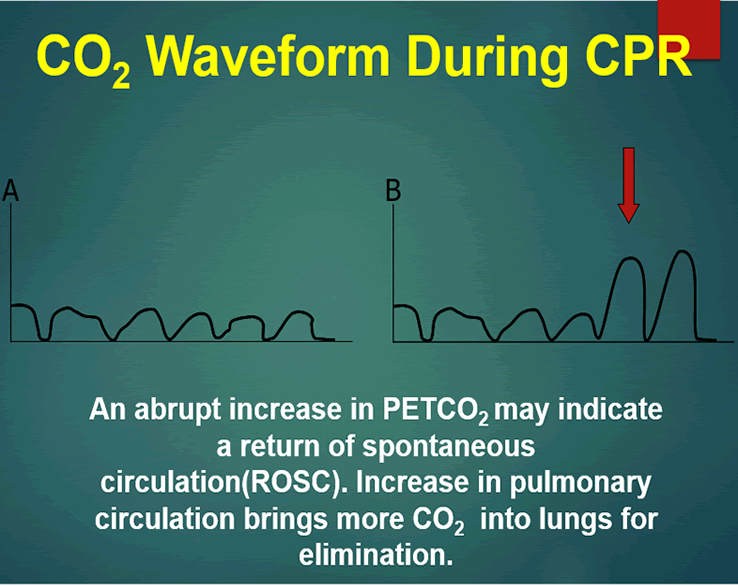
During CPR ETCO2 levels were initially high decreased to low levels and increased again at ROSC. End-tidal clearance must be evaluated in the context of the patients perfusion status.

Capnography Provides Bigger Physiological Picture To Maximize Patient Care Jems Ems Emergency Medical Services Training Paramedic Emt News
We investigated the effect of massive pulmonary embolism MPE on end tidal CO 2 etCO 2 and tested two hypotheses.

. Loss of ETCO2 may be the first sign that CPR is needed. Two very practical uses of waveform capnography in CPR are. 25 26 27 Flow.
1 that etCO 2 can distinguish massive. Dead-space ventilation results in ventilated alveoli with insufficient perfusion which. On the other hand a high CO2 reading may indicate airway narrowing airway obstruction or respiratory distress.
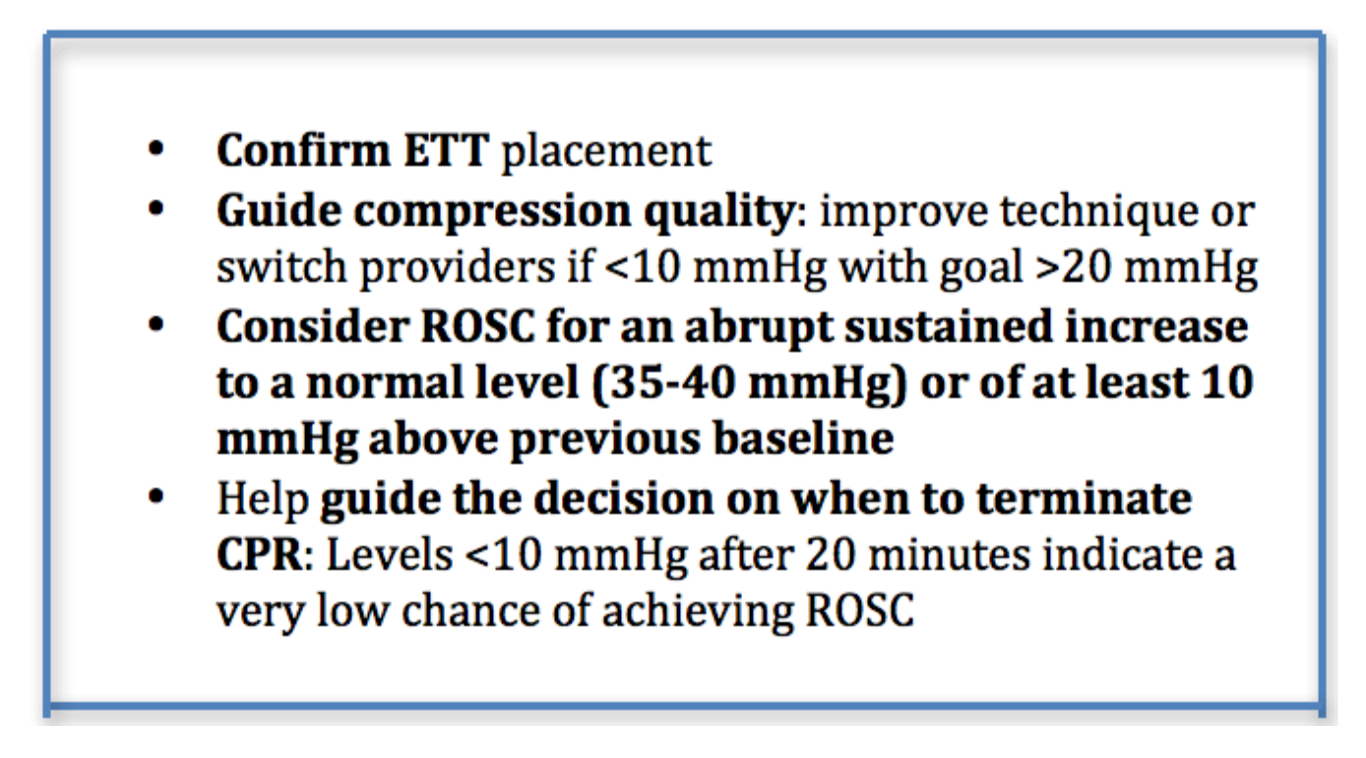
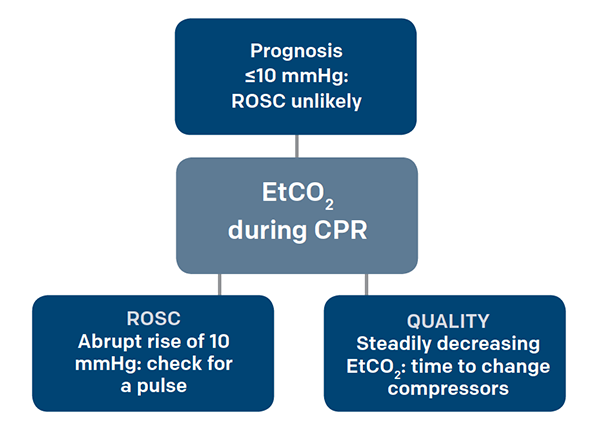
Measurement of a low ETCO 2 value 10 mmHg during CPR in an intubated patient suggests that the quality of chest compressions. Throughout the resuscitation end-tidal CO 2 was. Normal ETCO2 in the adult patient should be 35-45 mmHg.
A low end-tidal CO2 may indicate poor perfusion hypovolemia or sepsis. Cardiac output and end-tidal carbon dioxide. Cardiac output and end-tidal carbon dioxide.
Measurements during cardiopulmonary resuscitation CPR. Ann Emerg Med 0 by Asplin BR. Prognostic value of end-tidal carbon dioxide pressures during out-of-hospital cardiac arrest.
A low end-tidal CO2 may indicate poor perfusion hypovolemia or sepsis. Abrupt increase in ETCO2 suggests ROSC during CPR detectable. This pattern not previously described is different from that observed in animal and.
1 evaluating the effectiveness of chest compressions and 2. End-tidal CO2 ETCO2 detection requires air movement in and out of the lungs ventilation CO2 production. Gradual fall in ETCO2 suggests compressionist fatigue during CPR - time to change compressionists.
End-tidal carbon dioxide ETCO 2 as measured by waveform capnography is considered a physiologic measure of cardiac output in low-flow states and has been proposed. CPR is a low cardiac output state during which E tco 2 becomes less dependent on CO 2 production and ventilation and more linearly related to cardiac output.

Capnography During Cardiopulmonary Resuscitation Current Evidence And Future Directions
Waveform Capnography In The Intubated Patient Emcrit Project

3 Waveform Capnography Showing Changes In The End Tidal Carbon Dioxide Download Scientific Diagram

Reversible Causes Of Low Etco2 In Cpr Criticalcarenow
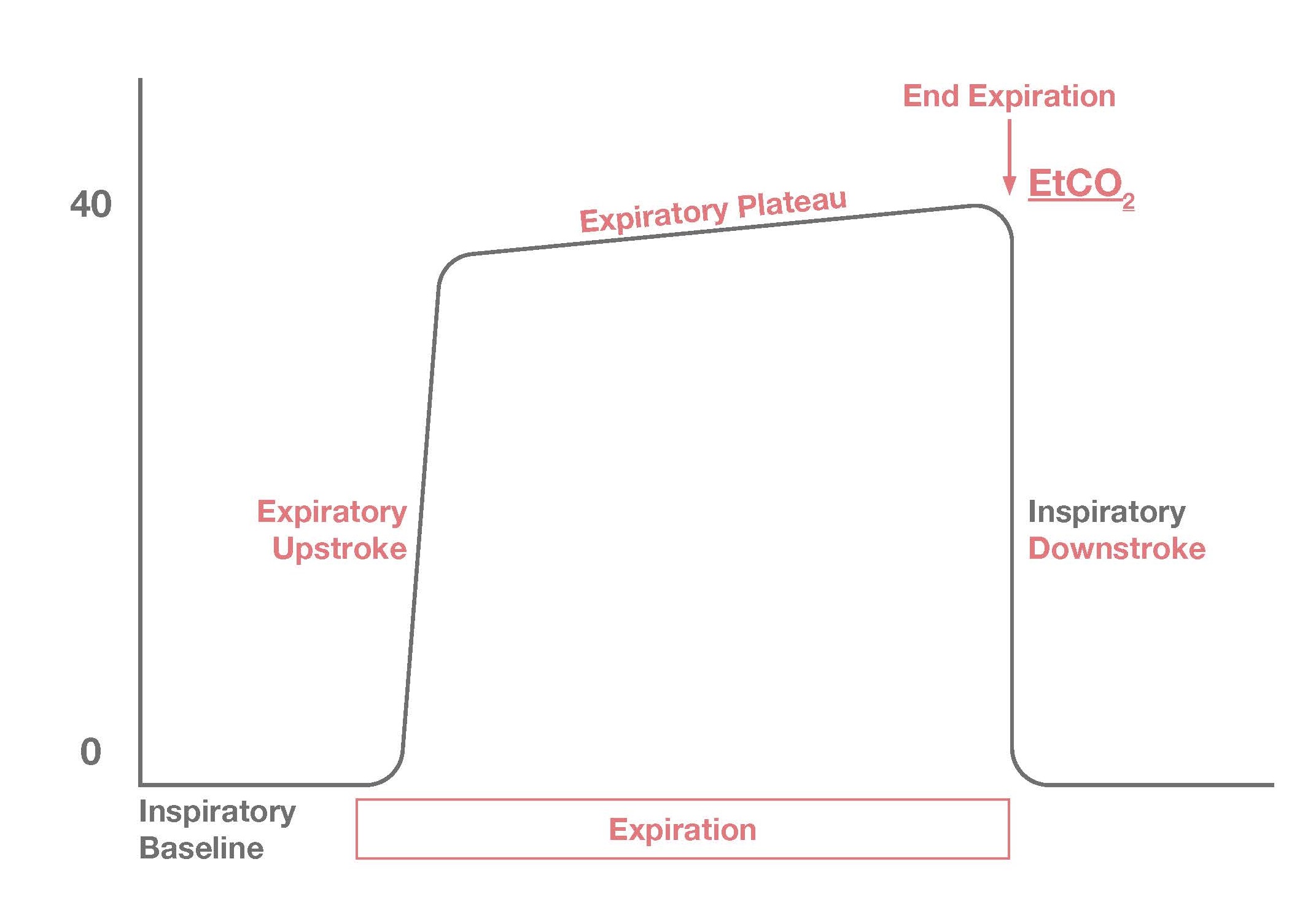
Quantitative Waveform Capnography Acls Medical Training

Capnography Provides Bigger Physiological Picture To Maximize Patient Care Jems Ems Emergency Medical Services Training Paramedic Emt News

Emergency Intubations Capnography

The Impact Of Ventilation Rate On End Tidal Carbon Dioxide Level During Manual Cardiopulmonary Resuscitation Resuscitation
Cpr Mobile Code Stand With Capnograph Capnography
Emdocs Net Emergency Medicine Educationcapnography In The Ed Emdocs Net Emergency Medicine Education

Learn More With This Respiratory Article By Melissa Marshall

Etco2 Valuable Vital Sign To Assess Perfusion The Airway Jedi

Etco2 Valuable Vital Sign To Assess Perfusion The Airway Jedi

Waveform Capnography In The Intubated Patient Emcrit Project

3 Waveform Capnography Showing Changes In The End Tidal Carbon Dioxide Download Scientific Diagram
Use End Tidal Capnography For Placing Orogastric Nasogastric Tubes And Cpr Page 2 Of 4 Acep Now Page 2

Reversible Causes Of Low Etco2 In Cpr Criticalcarenow

The Role Of Etco2 In Termination Of Resuscitation Jems Ems Emergency Medical Services Training Paramedic Emt News

Average Etco2 Kpa During Cpr In Patients With Or Without Rosc Download Scientific Diagram